
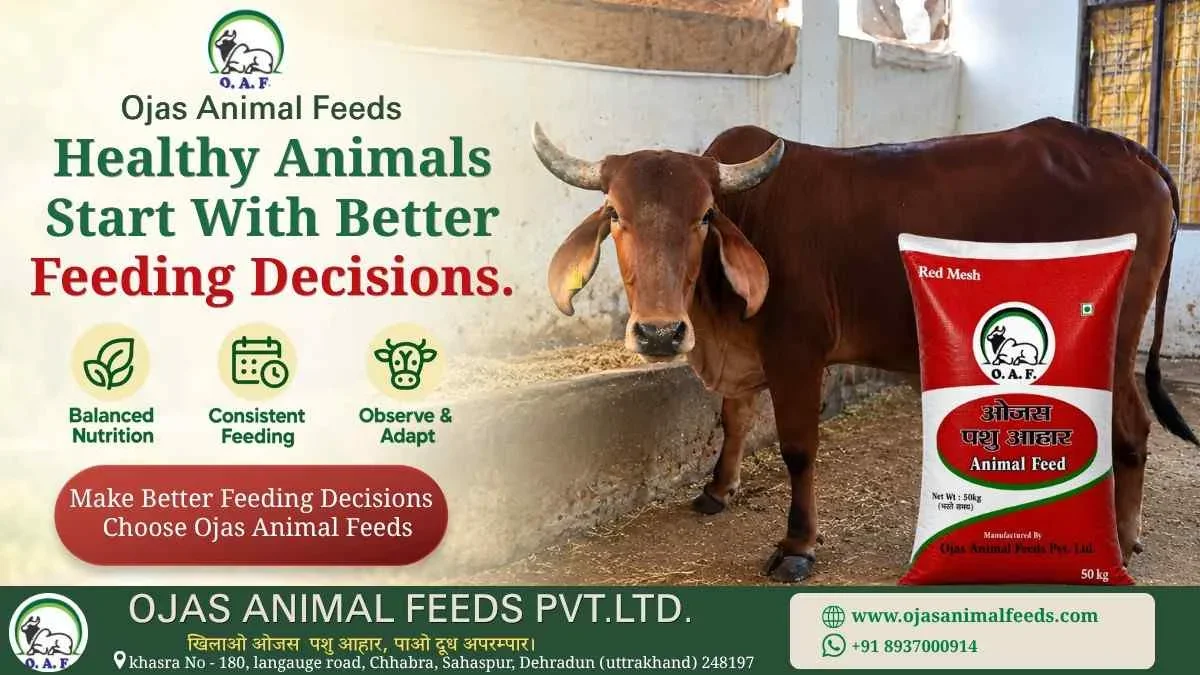
Healthy Animals Start With Better Feeding Decisions
In this article
Healthy livestock management begins with good feeding decisions. Animal nutrition is not simply about providing feed at regular intervals. It involves understanding the nutritional requirements of animals and creating feeding practices that support their different stages of growth, development, production, and daily maintenance.
Every animal has different nutritional requirements. Age, breed, body condition, production level, activity, and stage of growth can influence the type and amount of nutrition required.
For livestock farmers, understanding these factors can help create more informed feeding practices and support better overall animal care.
At Ojas Animal Feeds, the focus is on practical animal nutrition and responsible feeding practices, with an emphasis on understanding the relationship between feed quality, nutrition, and livestock management.
Understanding the Importance of Animal Nutrition
Animal nutrition provides the foundation for many important functions within livestock management. Animals require nutrients to support normal body functions, growth, maintenance, reproduction, and production.
Important nutritional components can include:
- Energy
- Protein
- Fibre
- Minerals
- Vitamins
- Water
The nutritional requirements of animals are not always the same. A growing calf may have different requirements from a mature dairy animal. Similarly, animals at different production stages may need different feeding approaches.
This is why understanding the animal’s specific nutritional needs is an important part of making better feeding decisions.
Feed Quality Matters
The quality of animal feed is an important consideration in livestock nutrition. Feed provides nutrients to animals, so its composition, handling, storage, and consistency all deserve attention.
Quality feed management begins before the feed reaches the animal. Proper ingredient selection, suitable processing, appropriate storage, and careful handling can all contribute to maintaining feed quality.
Farmers should also pay attention to how feed is stored at the farm. Protecting feed from moisture, contamination, pests, and unsuitable storage conditions can help maintain its condition.
Feeding Decisions Should Consider the Animal
One of the most important aspects of livestock feeding is understanding that animals have different requirements.
For example, young animals require nutrition that supports their growth and development. Growing heifers may require a feeding approach suited to their stage of development, while dairy animals may have different nutritional considerations depending on production levels.
Instead of treating every animal in the same way, farmers can consider factors such as:
- Age and growth stage
- Body condition
- Production level
- Daily activity
- Feeding history
- Water availability
- Overall condition
Understanding these factors can help farmers develop more practical feeding routines.
The Importance of a Consistent Feeding Routine
Consistency is another important part of livestock feeding management.
Providing feed at reasonably consistent times can help create an organized feeding routine. Frequent and unnecessary changes to feeding practices may make it more difficult to monitor how animals respond to their diet.
Farmers can maintain records of feeding schedules and observe changes in appetite, activity, body condition, and production.
Regular observation does not replace professional veterinary advice, but it can help farmers identify changes that may require further attention.
Water Is Also Part of Nutrition
When discussing animal nutrition, feed often receives most of the attention, but water is equally important.
Animals need regular access to clean and suitable drinking water. Water plays an important role in normal body functions and should be considered as part of everyday livestock management.
Farmers should regularly check water availability and maintain clean drinking areas. The quality and availability of water can be particularly important during periods of higher environmental temperature or increased animal activity.
Avoid Sudden Changes in Feeding Practices
Feeding routines should be managed carefully when introducing changes. Sudden changes to an animal’s diet may affect its feeding pattern and digestive adjustment.
When a change in feed is necessary, farmers should consider introducing changes carefully and, where appropriate, seek guidance from a qualified animal nutritionist or veterinarian.
The goal should be to maintain a structured feeding approach while considering the individual requirements of the animals.
Observe Animals Regularly
Animals can provide useful indicators through their daily behaviour and condition.
Farmers can regularly observe:
- Appetite and feed intake
- Activity levels
- Body condition
- General behaviour
- Water consumption
- Changes in production
- Overall appearance
Changes in these areas may indicate that an animal requires closer observation or professional attention.
Regular monitoring can therefore become an important part of responsible livestock management.
Feed Storage and Handling
Good feeding decisions also depend on proper feed storage and handling.
Feed should be stored in a clean and suitable environment. Excess moisture, pests, contamination, and improper handling can affect feed quality.
A practical feed storage routine may include keeping feed away from direct moisture, maintaining a clean storage area, using suitable storage arrangements, and regularly checking stored feed.
Proper handling from storage to feeding can help maintain a more consistent feeding process.
Better Feeding Requires Better Understanding
There is no single feeding approach that works for every animal or every farm. Good livestock nutrition involves understanding the animal, the feed, the feeding routine, and the overall farm environment.
Farmers can improve their feeding decisions by learning about animal nutritional requirements, observing their livestock, maintaining regular feeding practices, and understanding the importance of feed and water quality.
This knowledge can support a more structured approach to livestock management.
The Role of Responsible Animal Feed
Responsible animal feed management connects feed quality with practical livestock nutrition.
At Ojas Animal Feeds, the focus is on understanding practical feeding requirements and maintaining responsible approaches to animal feed production and nutrition.
From ingredient selection and processing to feed handling and final use, different stages can contribute to the consistency and quality of animal feed.
The broader goal is to support awareness around better feeding practices and the importance of informed nutrition decisions.
Conclusion
Healthy animals start with better feeding decisions, but good livestock nutrition involves more than simply selecting a feed product.
Understanding the nutritional requirements of animals, maintaining consistent feeding routines, providing clean water, storing feed properly, and regularly observing livestock are all important aspects of responsible animal care.
Farmers who understand the connection between animal feed, nutrition, and livestock management can make more informed decisions for their animals.
At Ojas Animal Feeds, the focus remains on practical animal nutrition, responsible feed practices, and greater awareness of the role that good feeding decisions play in livestock care.
Better understanding leads to better feeding decisions, and better feeding decisions are an important part of responsible animal care.