
How to Choose the Right Goat Feed for Better Goat Farming | Ojas Animal Feeds
In this article
Goat farming can be a rewarding agricultural activity, but successful management requires attention to several important factors. Housing, cleanliness, fresh water, health monitoring, breeding management, and nutrition all play a role in maintaining a well-managed goat farm.
Among these, Goat Feed is an important part of the daily routine.
Goats at different ages and stages may have different nutritional requirements. Growing goats, adult goats, breeding animals, and lactating does may not all require the same feeding approach. This makes it important for farmers to understand their animals and select feed according to their specific requirements.
However, good goat nutrition isn’t simply about providing more feed. Farmers should focus on appropriate feed selection, consistent feeding practices, proper storage, clean water, and regular observation.
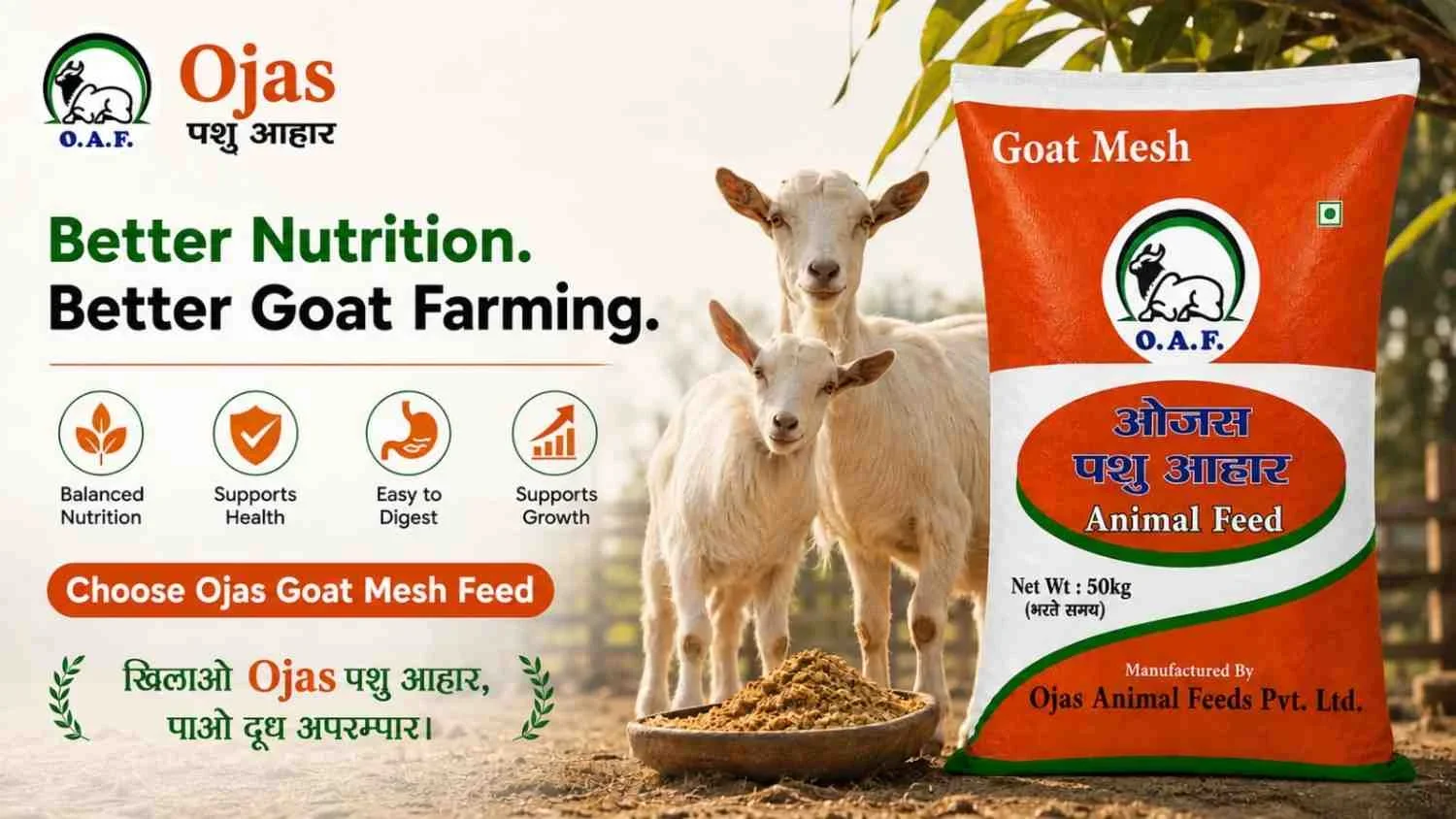
At Ojas Animal Feeds, we provide animal nutrition solutions designed to support farmers across different livestock categories. Our Goat Mesh Feed is part of our commitment to providing dependable feeding options for modern goat farming.
- Understand the Needs of Your Goats
The first step in choosing Goat Feed is understanding the animals receiving it.
Goats can differ according to:
- Age
- Body condition
- Growth stage
- Breed
- Production purpose
- Breeding status
- Lactation status
A young growing goat may have different nutritional requirements from an adult goat, while a lactating doe may require a different feeding programme.
Farmers should therefore consider the animal’s stage before deciding on a feeding routine.
- Why Proper Nutrition Matters in Goat Farming
Nutrition is closely connected with everyday livestock management.
A properly planned feeding programme can help farmers provide goats with the nutrients they require as part of their overall diet.
However, feed should not be considered separately from the rest of the farm environment.
Good goat management also involves:
- Fresh drinking water
- Clean housing
- Appropriate ventilation
- Hygiene
- Regular observation
- Proper grazing or forage management
- Veterinary guidance when required
A balanced approach is essential for responsible goat farming.
- What Is Goat Mesh Feed?
Mesh feed refers to feed presented in a finely processed, loose form rather than as pellets.
Goat Mesh Feed can be incorporated into a structured feeding programme depending on the type of goats, their requirements, and the manufacturer’s recommendations.
The physical form of feed can also influence how farmers handle, store, and provide it.
For this reason, farmers should always follow the product’s recommended usage instructions rather than assuming that every feed should be provided in the same quantity.
- Choose Feed According to the Goat’s Stage
One of the most important principles of livestock nutrition is stage-specific feeding.
Growing Goats
Young goats require an appropriate nutritional programme to support their development.
Farmers should pay attention to feed intake, water availability, housing, and general condition.
Adult Goats
Adult goats may require a maintenance-focused feeding programme depending on their activity and purpose.
Breeding Goats
Breeding animals require attentive management, including suitable nutrition and regular monitoring.
Lactating Goats
Does producing milk may have different nutritional requirements compared with non-lactating animals.
The feeding programme should therefore be adjusted according to the animal’s stage and farm management plan.
- Don’t Forget Green Fodder and Roughage
Concentrate feed is only one component of goat nutrition.
Goats may also receive forage, green fodder, dry fodder, or other appropriate feed sources depending on the farming system.
Farmers should consider the overall diet rather than relying on a single feed product.
The availability and quality of forage can vary by season, location, and farming system, so feeding practices may need to be adjusted accordingly.
- Fresh Water Is Essential
Good feeding practices should always be accompanied by access to clean drinking water.
Farmers should regularly check water containers and ensure that they are clean and accessible.
During hot weather or periods of increased activity, monitoring water availability becomes especially important.
Water management is a simple part of goat farming, but it should never be overlooked.
- Store Goat Feed Correctly
Buying quality feed is only the first step. Proper storage is equally important.
Goat Feed should be stored in a suitable location that is:
- Cool
- Dry
- Clean
- Protected from moisture
- Protected from pests
- Away from direct sunlight
Feed bags should preferably be kept off the floor and protected from damp surfaces.
During monsoon, farmers should pay particular attention to moisture because humid conditions can create additional storage challenges.
- Reduce Feed Wastage
Feed wastage can unnecessarily increase farm costs.
Farmers can reduce wastage by using suitable feeding equipment and avoiding excessive quantities being placed in feeders at one time.
Regularly check feeding areas for:
- Spilled feed
- Contamination
- Dampness
- Accumulated leftovers
Keeping feeding areas clean and organized can make daily farm management easier.
- Maintain Clean Feeding Equipment
Feeders and other equipment should be cleaned regularly.
A dirty feeding area can compromise overall farm hygiene.
Farmers should establish a simple cleaning routine and check feeding equipment regularly for accumulated dirt, moisture, or spoiled feed.
Good hygiene and good nutrition should always go together.
- Observe Your Goats Every Day
One of the most valuable tools a farmer has is regular observation.
Spend time observing the goats and look for changes in:
- Feed intake
- Water consumption
- Activity
- Behaviour
- General appearance
- Body condition
If a goat shows unusual changes or signs of illness, farmers should seek advice from a qualified veterinarian or animal health professional.
Early attention can help prevent small management issues from becoming larger problems.
- Avoid Sudden Changes in Feeding
Farmers should be cautious about making sudden changes to an animal’s feeding programme.
If a new feed is being introduced, follow the manufacturer’s recommendations and consider making changes appropriately rather than abruptly changing the entire diet.
Goat nutrition should be managed systematically, particularly when moving animals between different feeding programmes.
- Keep a Feeding Routine
Consistency is useful for farm management.
Farmers can maintain records of:
- Feed provided
- Feeding times
- Feed consumption
- Animal groups
- Changes in feeding
- General observations
Keeping simple records can help farmers identify patterns and make better-informed management decisions.
Why Quality Goat Feed Matters
The quality of feed is an important consideration when selecting nutrition products for your farm.
Farmers should look for:
🌾 Clear product information
🌿 Appropriate ingredients
📦 Proper packaging
🔍 Consistent quality
🏭 Reliable manufacturing
📋 Clear usage recommendations
A dependable feed manufacturer can make it easier for farmers to maintain consistency in their feeding programme.
Why Choose Ojas Animal Feeds?
At Ojas Animal Feeds, we understand that every livestock category has different nutritional requirements.
Our products are developed with the goal of providing dependable animal nutrition solutions for farmers.
Our range covers different farm animals, including:
🐐 Goats
🐄 Cattle
🐎 Horses
🐖 Pigs
🐇 Rabbits
🐑 Sheep
🐔 Poultry
Our Goat Mesh Feed is designed as part of our livestock feed range for farmers looking for a dedicated feeding option for goats.
The Ojas Animal Feeds Promise
🌾 Quality-Focused Animal Nutrition
🐐 Goat Feed Solutions
🥣 Goat Mesh Feed
🌿 Carefully Selected Ingredients
📦 Consistent Product Standards
🚜 Designed for Farm Management
🤝 Supporting Farmers Through Better Nutrition Awareness
The Ojas Animal Feeds Difference
Modern goat farming requires more than simply putting feed in front of animals. Farmers need to understand the relationship between nutrition, water, housing, hygiene, observation, and overall farm management.
At Ojas Animal Feeds, our focus extends beyond providing feed products. We believe farmers should have access to practical information that helps them make informed feeding decisions.
Our Goat Mesh Feed can be incorporated into a suitable feeding programme according to the animal’s requirements and product recommendations.
The right approach is always to consider the complete feeding system rather than focusing on one product alone.
A Simple Checklist for Goat Farmers
Before providing feed, farmers can ask themselves:
✔️ Is the feed suitable for the animal’s stage?
✔️ Is clean drinking water available?
✔️ Is the feed stored in a dry location?
✔️ Are feeding areas clean?
✔️ Is unnecessary feed wastage being avoided?
✔️ Are goats being observed regularly?
✔️ Is the overall diet balanced with appropriate forage?
✔️ Are feeding changes being made responsibly?
These simple questions can help create a more organized feeding routine.
Final Thoughts
Good goat farming is built on consistent everyday management.
Choosing appropriate Goat Feed is an important part of that process, but it should always be combined with clean water, suitable forage, proper storage, good hygiene, appropriate housing, and regular observation.
For farmers using Goat Mesh Feed, following product recommendations and considering the age, stage, and requirements of the animals can help create a more structured feeding programme.
At Ojas Animal Feeds, we are committed to providing dependable animal nutrition solutions for farmers and supporting better awareness around responsible livestock feeding.
Better Nutrition. Better Management. Better Farming. Choose Ojas Animal Feeds.