
Not Every Animal Eats the Same: Why Species-Specific Feeding Matters on a Farm | Ojas Animal Feeds
In this article
Not Every Animal Eats the Same: Why Species-Specific Feeding Matters on a Farm
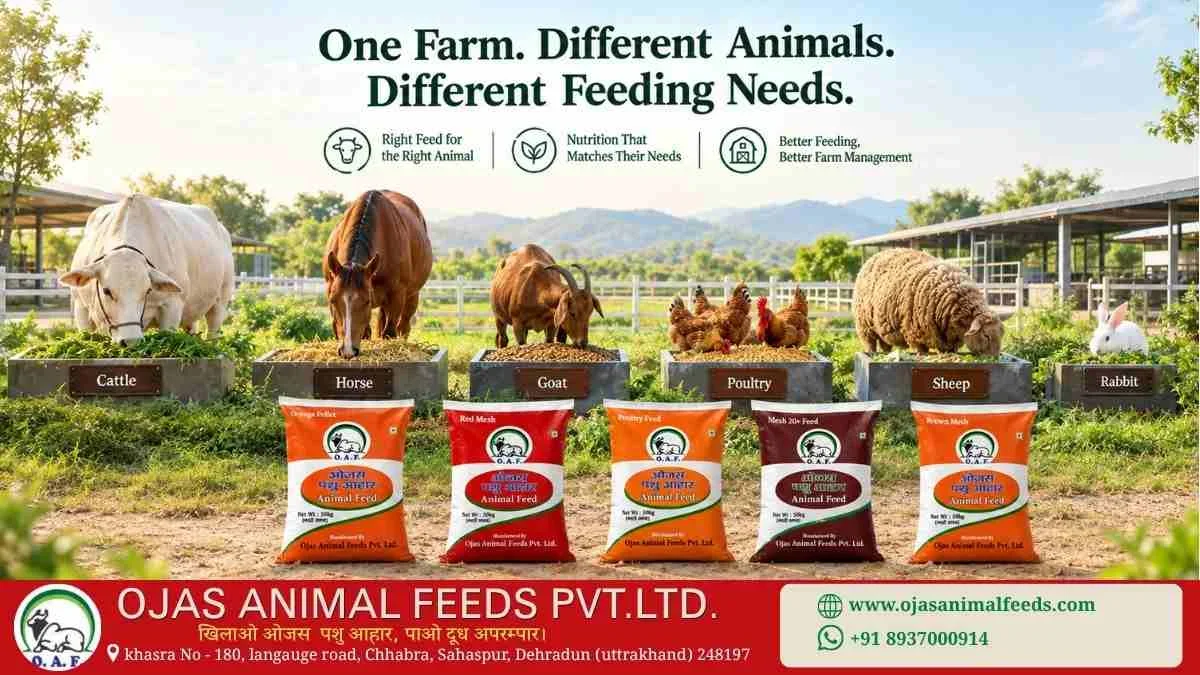
A farm can have several types of animals living and being managed under the same roof—but that doesn’t mean they all have the same nutritional requirements.
Cattle, buffaloes, goats, sheep, horses, poultry, swine, and rabbits are different animals with different feeding habits and nutritional needs.
Yet, one common mistake in livestock management is looking at animal feed as a one-size-fits-all requirement.
Good Animal Nutrition starts with understanding the animal.
At Ojas Animal Feeds, we believe that choosing the right feed for the right animal is an important part of responsible Livestock Management.
One Farm Can Have Many Different Feeding Requirements
Consider a mixed farm.
There may be cattle in one section, goats in another, poultry nearby, and perhaps horses or rabbits as well.
Although all of them need nutrition to support their daily needs, their bodies, feeding behaviour, growth stages, and management requirements are different.
This means farmers need to think beyond simply asking:
“How much feed do I need?”
A better question is:
“What feed is appropriate for the animal I am raising?”
Why Species Matters in Animal Nutrition
Different species process and utilise nutrients differently.
Their diets can vary in terms of ingredients, nutrient balance, feeding quantity, and feeding frequency.
For example, the feeding approach for cattle should not automatically be applied to poultry or rabbits.
Similarly, growing goats have different requirements from other farm animals.
Understanding these differences is an important part of Animal Nutrition.
Age and Purpose Matter Too
Species is only the beginning.
Within the same species, nutritional requirements can also change according to age and stage of production.
A young animal that is still growing may have different nutritional requirements from a mature animal.
Likewise, animals being raised for different purposes may require different feeding approaches.
This is why simply selecting feed based on the animal’s species isn’t always enough.
Farmers should also consider:
- Age
- Growth stage
- Production stage
- Activity level
- Overall farm management
Professional nutritional guidance where required
Quality Animal Feed Is About Suitability
When farmers hear the phrase Quality Animal Feed, it shouldn’t simply mean feed that looks good or comes in a well-designed bag.
Quality also involves choosing a feed that is appropriate for the animal and its nutritional requirements.
The right feed, provided correctly and as part of a well-managed routine, can become an important component of responsible livestock care.
A Mixed Farm Needs a Clear Feeding System
When multiple species are raised together, organisation becomes especially important.
Farmers can make feeding routines easier to manage by:
- Identifying feed clearly
- Keep different feeds properly labelled and separated to reduce confusion.
- Maintaining individual routines
- Different animals may require different feeding schedules and quantities.
- Storing feed correctly
- Keep feed dry, clean, and protected from contamination.
- Observing animals
Regular observation can help farmers notice changes in feeding behaviour or routine.
These simple practices can make Livestock Management more systematic.
Don’t Forget the Water
Feed is only one part of a farm’s nutrition routine.
Clean, accessible drinking water is equally important for livestock management.
Water requirements vary between animals and can also change with environmental conditions, activity, and other factors.
Farmers should therefore ensure animals have appropriate access to clean drinking water as part of their daily care routine.
Ojas Animal Feeds: Feed for Different Farm Animals
At Ojas Animal Feeds, our product range supports feeding requirements across multiple categories of farm animals.
Our feed solutions include products for:
- Cattle and buffaloes
- Goats and sheep
- Horses
- Poultry
- Swine
- Rabbits
Heifers and other specific livestock categories
This variety reflects an important principle:
Different animals deserve feeding solutions suited to their needs.
Ojas Animal Feeds focuses on Urea-Free Quality Animal Feed as part of its approach to supporting farmers and their livestock.
Better Feeding Starts With Better Understanding
Farmers don’t need to memorise complicated nutritional science to improve everyday feeding management.
They can start with a few simple questions:
- What animal am I feeding?
- What stage of life is it in?
- What is its nutritional requirement?
- Am I using feed intended for that animal?
- Is the feed being stored and handled properly?
These questions encourage a more thoughtful approach to Animal Nutrition.
The Goal Isn’t More Feed—It’s Appropriate Feed
More feed does not automatically mean better nutrition.
The focus should be on appropriate feeding practices, suitable feed, proper storage, clean water, and overall animal management.
Farmers can work with qualified animal nutritionists or veterinarians when they need advice tailored to specific animals, conditions, or production goals.
Responsible feeding is about understanding what the animal actually needs.
Final Thoughts
Every animal on a farm has its own nutritional story.
A goat isn’t a cow.
A horse isn’t a sheep.
Poultry isn’t swine.
And their feeding requirements shouldn’t be treated as identical.
Understanding these differences can help farmers build more organised and responsible feeding routines.
With Species-Specific Animal Feed, appropriate Animal Nutrition, and consistent Livestock Management, farmers can approach feeding with greater awareness and purpose.
Know the Animal. Choose the Right Feed. Manage with Purpose.
Ojas Animal Feeds — supporting farmers with Urea-Free Quality Animal Feed for different farm animals. 🌾🐄🐐🐎🐔