
The Feed Storage Checklist: Simple Habits That Help Protect Animal Feed | Ojas Animal Feeds
In this article
The Feed Storage Checklist: Simple Habits That Help Protect Animal Feed
Choosing the right feed is only one part of responsible livestock management.
How that feed is handled and stored after it reaches the farm also matters.
Farmers put considerable attention into selecting Quality Animal Feed, but storage conditions can sometimes be overlooked. Moisture, poor ventilation, pests, dirt, and unsuitable storage spaces can affect how feed is maintained.
That’s why Animal Feed Storage should be treated as an important part of everyday Feed Management.
At Ojas Animal Feeds, we believe that good livestock care involves looking at the complete feeding routine—from selecting appropriate feed to storing and handling it responsibly.
Why Animal Feed Storage Matters
Feed is an important part of daily livestock management.
Once feed reaches the farm, it may remain in storage until it is needed. During this period, the storage environment can influence how well the feed is protected.
A good storage routine aims to keep feed:
- Dry
- Clean
- Protected
- Organised
- Away from unnecessary contamination
Simple habits can make a meaningful difference to everyday Animal Feed Storage.
Keep Feed Away From Moisture
Moisture is one of the first things farmers should consider when arranging a feed storage area.
Rainwater, damp floors, leaks, or excessive humidity can create an unsuitable environment for stored feed.
Where possible, feed should be kept in a dry area protected from direct exposure to rain and water.
During the monsoon season, checking storage areas regularly becomes particularly important.
A quick inspection for leaks or dampness can help farmers identify potential problems before they become bigger concerns.
Keep Bags Off the Floor
Another simple storage practice is to avoid placing feed bags directly on damp or dirty floors.
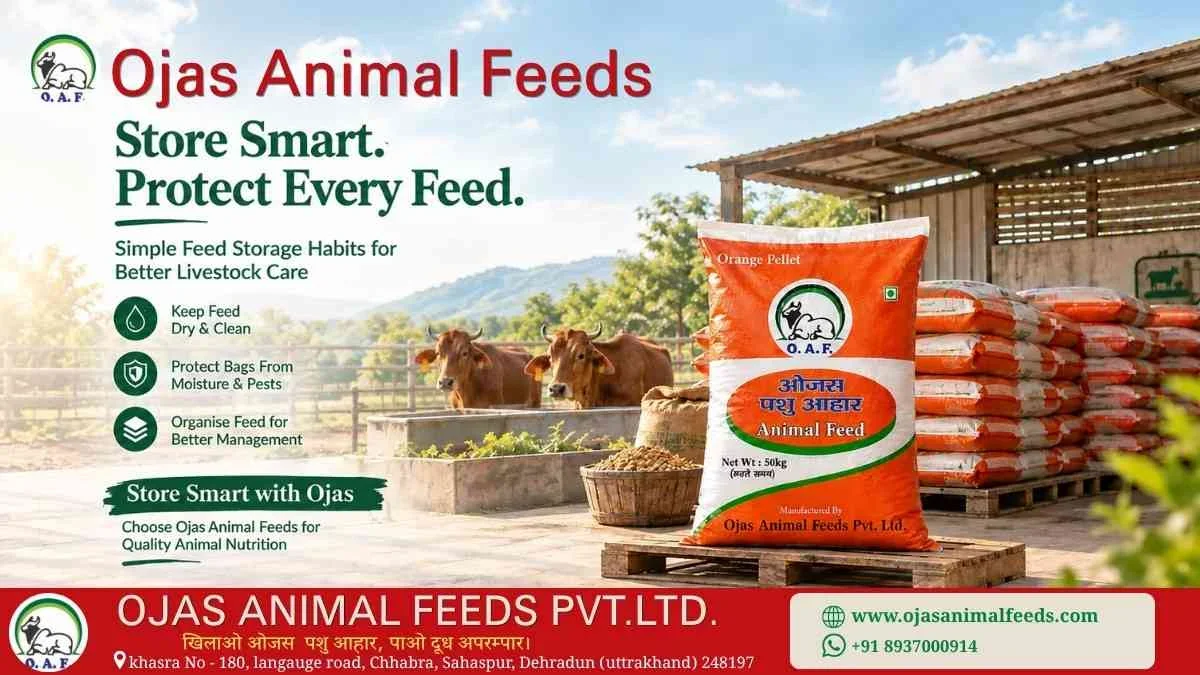
Using suitable pallets or raised platforms can help create separation between the feed bags and the floor.
This can also make cleaning the storage area easier.
The objective is simple:
Keep stored feed clean, dry, and properly organised.
Choose a Suitable Storage Area
A good storage area doesn’t need to be complicated.
It should provide reasonable protection from weather conditions and allow the farmer to keep feed organised.
Ideally, the area should be:
- Dry
- Clean
- Well maintained
- Protected from rainwater
- Free from unnecessary clutter
- Less accessible to pests
Good Feed Management begins with a storage system that is easy to maintain.
Protect Feed From Pests
Pests can become a concern wherever feed and agricultural materials are stored.
Regularly inspecting the storage area can help farmers identify signs of unwanted pests.
Keeping the surrounding area clean, removing unnecessary waste, and maintaining proper storage practices can help reduce avoidable problems.
If pest activity becomes persistent, appropriate professional or agricultural guidance should be considered.
Follow a First-In, First-Out Approach
Organisation can make everyday feed management easier.
When multiple bags of feed are stored, farmers can arrange them so that older stock is used before newer stock, wherever appropriate.
This simple first-in, first-out approach can help prevent bags from being forgotten at the back of the storage area.
It also makes it easier to keep track of what is available.
Don’t Mix Different Feeds Without a Reason
Different animals and production stages may require different feed products.
For this reason, clearly separating and labelling different feed categories can make storage more organised.
For example, feed intended for different farm animals should be easy to identify.
This reduces confusion during daily feeding and supports a more structured livestock routine.
Check the Feed Before Feeding
Storage isn’t a one-time task.
Before using stored feed, farmers should take a moment to inspect it.
Look at the packaging and the storage condition.
If there are signs of moisture, contamination, unusual changes, or damaged packaging, the feed should not simply be used without assessment.
When in doubt, consult the feed supplier or an appropriate agricultural or animal nutrition professional.
Storage Is Part of Livestock Care
It is easy to think of Livestock Care as only feeding, watering, and cleaning animals.
But the way feed is handled is also part of responsible farm management.
A farmer may carefully plan a feeding routine, but that routine also depends on having feed available in a suitable condition.
That’s why Animal Feed Storage deserves a place in the daily farm checklist.
Ojas Animal Feeds: Supporting Better Feed Management
Ojas Animal Feeds provides Urea-Free Quality Animal Feed for different farm animals, including cattle, buffaloes, goats, sheep, horses, poultry, swine, rabbits, and other livestock categories.
Selecting the appropriate feed is an important decision, but responsible handling and storage are equally useful parts of a complete feeding routine.
By combining suitable feed with organised Feed Management, farmers can create a more systematic approach to everyday livestock care.
A Simple Daily Storage Checklist
Farmers can keep a simple checklist near the feed storage area:
✓ Is the storage area dry?
✓ Are the bags protected from direct contact with the floor?
✓ Is there any water leakage?
✓ Are the bags clean and properly arranged?
✓ Is there any sign of pest activity?
✓ Are different feed types clearly organised?
✓ Is older stock being used appropriately?
✓ Has the feed been checked before use?
These small checks can become part of a practical daily routine.
Final Thoughts
Good feeding management doesn’t end when feed is purchased.
It continues through transportation, storage, handling, and daily feeding.
By paying attention to Animal Feed Storage, farmers can create a cleaner and more organised system for managing Quality Animal Feed.
- Keep feed dry.
- Keep the storage area clean.
- Protect bags from moisture and pests.
- Organise different feed types.
- Inspect feed before use.
- And maintain a consistent routine.
- Good feed deserves good storage.
Ojas Animal Feeds — Urea-Free Quality Animal Feed for different farm animals. 🌾🐄🐐🐎🐔