
The Science Behind Better Feed Storage: Protecting Animal Feed From Farm to Feeding Time | Ojas Animal Feeds
In this article
The Science Behind Better Feed Storage: Protecting Animal Feed From Farm to Feeding Time
A good feeding routine doesn’t end when the feed reaches the farm.
What happens between purchasing animal feed and serving it to livestock also matters.
Storage is often an overlooked part of Livestock Management, yet poor storage conditions can affect the quality and usability of feed.
Moisture, pests, contamination, poor ventilation, and unsuitable storage areas can create unnecessary challenges for farmers.
That’s why understanding Feed Storage is an important part of maintaining a consistent feeding routine.
At Ojas Animal Feeds, we believe that good nutrition begins not only with selecting Quality Animal Feed, but also with handling and storing it responsibly.
Why Feed Storage Deserves Attention
Farmers spend considerable time making sure their animals receive appropriate feed.
But even good feed needs suitable storage.
If feed is left exposed to rain, moisture, excessive humidity, dirt, or pests, its condition can change.
A simple storage routine can therefore help farmers protect the feed they have already invested in.
Good Feed Storage is about prevention rather than correction.
Moisture Is One of the Biggest Concerns
One of the most important things to control when storing animal feed is unnecessary moisture.
Wet or damp storage conditions can affect feed quality and may encourage mould growth.
Farmers can reduce these risks by:
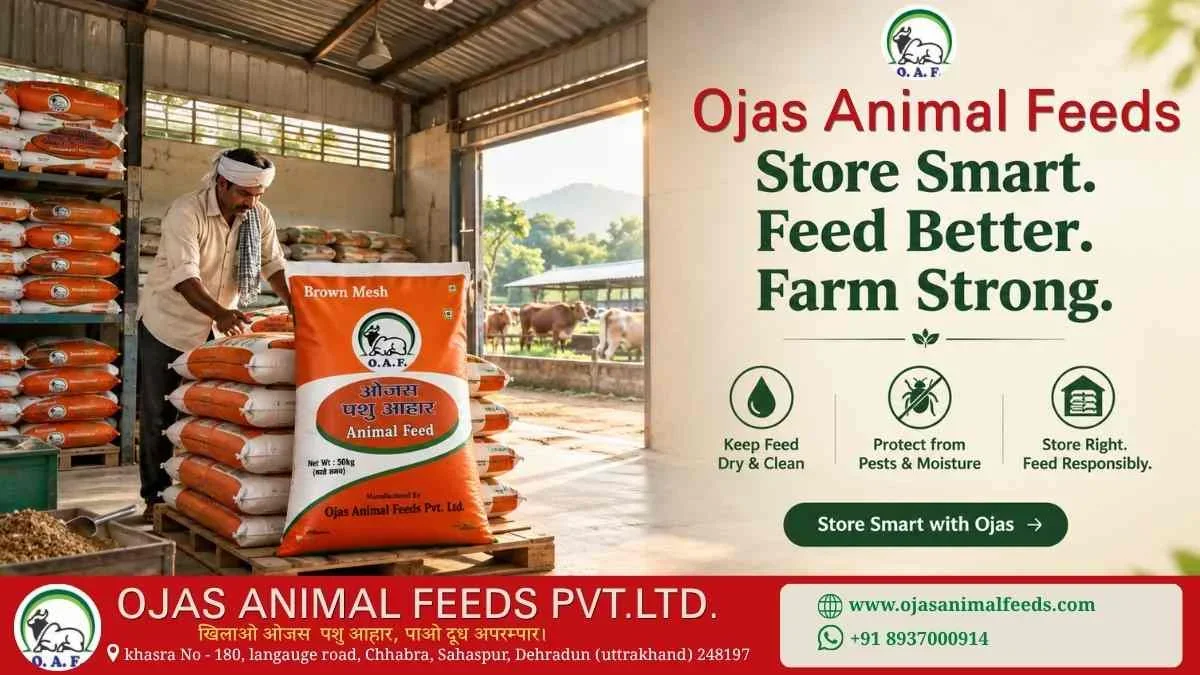
Keeping feed in a dry storage area.
Protecting it from rain and water leakage.
Avoiding direct contact with damp floors.
Checking the storage area regularly.
Keeping the surrounding area clean.
A dry and clean environment provides a better foundation for storing Quality Animal Feed.
Keep Feed Off the Floor
Placing feed directly on the floor can expose it to moisture, dirt, and other contaminants.
Using pallets or another suitable raised surface can create a gap between feed bags and the floor.
This is especially useful during periods of high humidity or monsoon weather.
A few extra inches of separation can make storage management easier and help keep the surrounding area cleaner.
Ventilation Matters Too
A storage room shouldn’t simply be dry—it should also be appropriately ventilated.
Poor airflow can contribute to humidity and create an unsuitable storage environment.
Farmers should aim for a storage area that is:
Dry + Clean + Ventilated + Protected
These four factors can make everyday Feed Storage much easier to manage.
Protect Feed From Pests
Rodents and insects can create another challenge in feed storage areas.
Apart from consuming feed, pests can contaminate the surrounding storage environment.
Regular cleaning and inspection can help farmers identify problems early.
Keep unnecessary waste away from feed storage, clean spills promptly, and inspect bags periodically for signs of damage.
Good Livestock Management includes paying attention to these seemingly small details.
Follow a Simple Rotation System
Another useful practice is to avoid letting older feed remain unused while newly purchased feed is opened first.
A simple rotation system helps farmers use older stock before newer stock.
Before using a bag, check:
The condition of the packaging
Whether the feed has been exposed to moisture
Signs of pest activity
The storage duration
Any noticeable change in appearance or smell
If something appears unusual, it is better to seek appropriate guidance rather than use questionable feed.
Storage and Animal Nutrition Are Connected
Farmers often focus on Animal Nutrition in terms of what they provide to their animals.
But nutrition management also involves maintaining the feed properly before it reaches the feeding area.
Good feed selection + responsible storage + consistent feeding practices = a more organised feeding system.
This doesn’t replace veterinary or professional nutritional advice, but it can help farmers manage the practical side of everyday feeding.
Monsoon Makes Storage Even More Important
During the monsoon season, humidity and water exposure can make feed storage more challenging.
Farmers may need to pay extra attention to:
Roof and wall leaks
Damp floors
Air circulation
Water accumulation
Pest activity
Condition of feed bags
Regular checks become especially useful during changing weather conditions.
The goal is simple: keep the feed dry, clean, and protected.
Ojas Animal Feeds: Quality From the Beginning
At Ojas Animal Feeds, we provide Urea-Free Quality Animal Feed for different farm animals, including cattle, buffaloes, goats, sheep, horses, poultry, swine, rabbits, and others.
But responsible feeding doesn’t stop with the product.
Farmers play an equally important role in how feed is stored, handled, and provided to their animals.
When product quality and good farm practices work together, farmers can create a more consistent approach to Animal Nutrition.
Small Storage Habits, Better Farm Management
Good farming often comes down to details.
Checking a storage room.
Keeping bags raised from the floor.
Cleaning spills.
Watching for pests.
Protecting feed from moisture.
Rotating stored feed properly.
None of these tasks is complicated.
But together, they can make Feed Storage more organised and reduce avoidable problems on the farm.
Final Thoughts
Quality feed deserves quality handling.
From the moment feed reaches the farm until it reaches the feeding area, every step matters.
By maintaining clean, dry, ventilated, and protected storage conditions, farmers can make feed management a more dependable part of their daily routine.
Because Animal Nutrition isn’t just about what you feed.
It is also about how responsibly you manage it.
Store Smart. Feed Responsibly. Farm Strong with Ojas Animal Feeds. 🌾🐄