
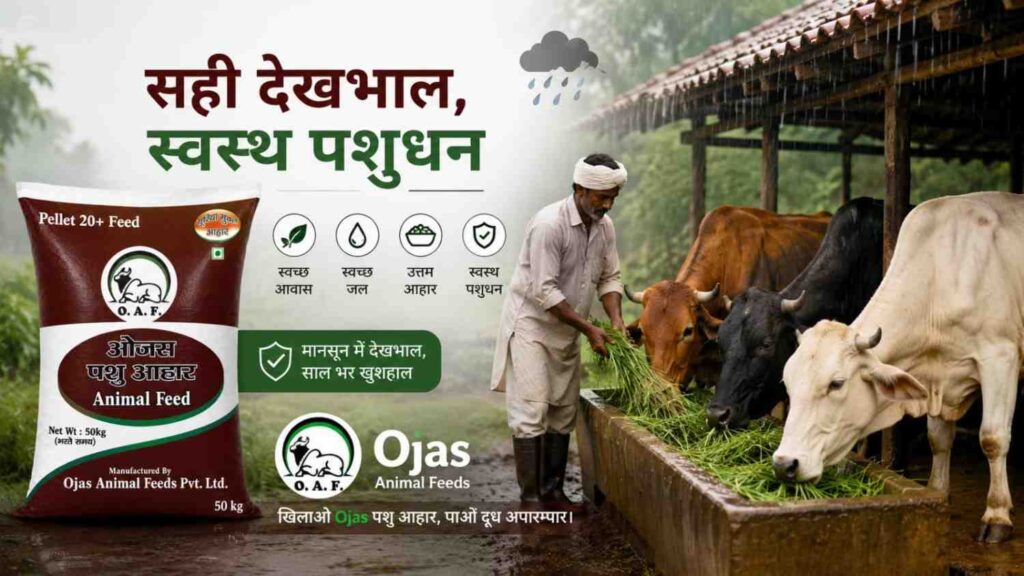
Monsoon Farm Checklist: 7 Simple Steps Every Livestock Farmer Should Follow
The monsoon season brings relief from the summer heat, but it also introduces new challenges for livestock farmers. Wet surroundings, increased humidity, muddy shelters, and changing weather conditions can affect both animal comfort and farm management.
A little preparation can go a long way in protecting your livestock during the rainy season.
At Ojas Animal Feeds, we believe that successful farming is built on prevention, consistency, and smart management. Here’s a simple monsoon checklist every farmer can follow.
- Keep Animal Shelters Dry
Moisture inside sheds creates an uncomfortable environment for livestock.
Ensure that:
- Roofs do not leak.
- Water does not accumulate near the shelter.
- Bedding remains clean and dry.
- Proper drainage is maintained around the farm.
- A dry shelter contributes to a healthier environment.
- Store Feed Away from Moisture
Rain and humidity can affect feed quality if it is not stored properly.
Keep Quality Animal Feed:
- Off the ground on wooden pallets.
- In a cool, dry storage room.
- Covered to prevent moisture exposure.
- Protected from rodents and insects.
- Good storage helps preserve feed quality.
- Never Ignore Clean Drinking Water
During the monsoon, water sources can easily become contaminated.
Clean water troughs regularly and ensure animals always have access to fresh drinking water.
Water hygiene is just as important as feed quality.
- Observe Animals Every Day
The rainy season can bring sudden changes in animal behaviour.
Take a few minutes daily to observe:
- Appetite
- Activity levels
- Walking pattern
- General alertness
- Condition of the coat and hooves
Early observation allows farmers to respond quickly to any concerns.
- Keep Feeding Areas Clean
Wet feed can spoil quickly.
Clean feed troughs after every feeding and remove leftover feed to maintain hygiene and reduce wastage.
A clean feeding area supports better Farm Hygiene.
- Maintain a Consistent Feeding Routine
Weather may change, but feeding routines shouldn’t.
Providing Quality Animal Feed at regular times helps animals maintain a stable routine throughout the season.
Consistency remains one of the most valuable farming practices.
- Prepare Before Heavy Rain Arrives
Smart farmers prepare instead of reacting.
Before heavy rainfall:
- Check roof repairs.
- Inspect drainage systems.
- Secure feed storage.
- Keep emergency supplies ready.
- Ensure easy access to clean water.
- Preparation saves both time and effort later.
Why Choose Ojas Animal Feeds?
At Ojas Animal Feeds, we manufacture Urea-Free Quality Animal Feed for:
🐄 Cattle
🐐 Goats
🐎 Horses
🐖 Swine
🐔 Poultry
🐑 Sheep
🐇 Rabbits
We are committed to supporting farmers with reliable nutrition and practical farming knowledge throughout every season.
The Ojas Animal Feeds Difference
Every season brings new challenges, and every challenge requires the right preparation.
Our focus is not only on delivering Quality Animal Feed but also on helping farmers adopt better livestock management practices that support healthier farms all year round.
Final Thoughts
The monsoon doesn’t have to slow your farm down.
By maintaining dry shelters, storing feed properly, ensuring clean water, practising good Farm Hygiene, and providing Quality Animal Feed, farmers can protect Healthy Livestock and continue building a productive farm despite the rainy season.
Because every successful monsoon begins with good preparation.
Prepare Smart. Feed Right. Farm Better with Ojas Animal Feeds.