
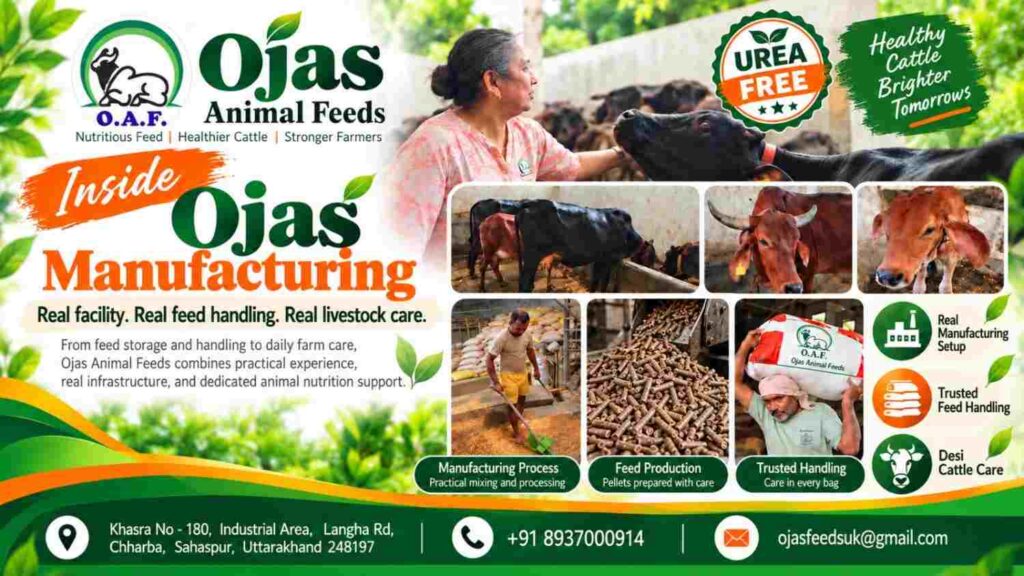
Animal feed plays an important role in livestock management, but the quality of feed does not begin when it reaches the farm. It begins much earlier, with proper ingredient handling, storage, processing, manufacturing, and quality management.
A well-organized feed manufacturing setup helps maintain consistency throughout the production process. Each stage, from receiving and storing ingredients to processing and preparing the final feed, contributes to the overall quality of the finished product.
At Ojas Animal Feeds, attention to practical animal nutrition and responsible manufacturing forms an important part of the overall approach to animal feed production.
Why Feed Manufacturing Matters
Animal feed is made up of different ingredients that contribute to the nutritional requirements of livestock. However, simply selecting ingredients is not enough. Proper handling and processing are also important for maintaining consistency.
Feed manufacturing involves multiple stages, including:
- Ingredient receiving and selection
- Proper storage
- Material handling
- Processing and mixing
- Feed preparation
- Packaging and handling of finished feed
Each stage needs to be managed carefully because changes in storage conditions, handling, or processing can influence the consistency of the final feed.
Proper Storage Is an Important First Step
Storage is one of the basic but important parts of feed manufacturing. Ingredients and finished feed need to be stored in suitable conditions to help protect them from moisture, contamination, pests, and unnecessary exposure.
Poor storage conditions can affect the quality of feed ingredients. Maintaining an organized storage area makes it easier to handle materials properly and maintain better control throughout the manufacturing process.
For a feed manufacturing facility, good storage practices are therefore an important part of responsible feed management.
Careful Handling of Feed Ingredients
Before ingredients become part of the finished feed, they need to be handled appropriately. Proper handling helps maintain the condition of the materials and supports a more organized manufacturing process.
Careful material handling also helps reduce unnecessary contamination and wastage.
A systematic approach to handling ingredients can make the manufacturing process more efficient while supporting consistency from one production stage to another.
The Role of an Organized Manufacturing Process
An organized manufacturing process helps bring different ingredients together in a structured manner. Depending on the type of feed being produced, ingredients may need to go through different processing and mixing stages.
Consistency is important during this process. The objective is to prepare feed in a controlled and repeatable manner so that the finished product maintains a consistent composition and form.
At Ojas Animal Feeds, the manufacturing setup reflects an approach focused on responsible feed production and practical livestock nutrition.
Connecting Manufacturing with Animal Nutrition
Feed manufacturing and animal nutrition are closely connected. The purpose of producing animal feed is ultimately to provide suitable nutritional support for livestock according to their requirements.
Different animals and different stages of growth or production can have different nutritional needs. Calves, heifers, dairy animals, and other livestock may require different feeding approaches.
This is why understanding animal nutrition is an important part of developing and manufacturing suitable feed products.
A manufacturing setup should therefore be viewed not only as a place where feed is produced, but also as a system where nutrition, ingredients, processing, and quality come together.
Quality and Consistency in Feed Production
Consistency is an important consideration in animal feed manufacturing. Farmers depend on a reliable feeding routine, and consistent feed quality can make feeding management more structured.
Maintaining consistency requires attention at different stages of production. Ingredient selection, storage, processing, mixing, packaging, and handling all contribute to the final product.
Regular attention to these processes can help create a more systematic approach to feed manufacturing.
From Manufacturing Setup to the Farm
The journey of animal feed does not end at the manufacturing facility. Once the finished feed reaches the farm, proper storage and handling continue to play an important role.
Farmers should store feed in suitable conditions and protect it from moisture and contamination. Feed should also be handled carefully and provided according to the animal’s nutritional requirements.
This creates a connection between the manufacturing process and everyday livestock management.
Good feed manufacturing practices and good farm-level feeding practices work together as part of a broader approach to animal nutrition.
Animal Care Goes Beyond Feed
Although feed is an important part of livestock management, animal care involves much more than nutrition alone.
Clean drinking water, suitable housing, hygiene, regular observation, proper feeding schedules, and veterinary guidance are also important aspects of responsible livestock care.
Farmers can regularly observe animals for changes in appetite, activity, body condition, and general behaviour. Such observations can provide useful information for managing feeding and animal care practices.
A Practical Approach to Animal Feed Manufacturing
A responsible feed manufacturing setup is built around several connected elements:
Proper storage: Helps protect ingredients and finished feed.
Careful handling: Supports cleanliness and reduces unnecessary wastage.
Organized processing: Helps maintain a systematic production process.
Consistent manufacturing: Supports greater uniformity in finished feed.
Nutrition-focused approach: Keeps animal requirements at the centre of feed production.
Together, these practices create a structured approach to animal feed manufacturing.
Conclusion
Behind every feed bag is a process that begins long before the product reaches the livestock farm. Proper storage, careful handling, organized manufacturing, and an understanding of animal nutrition all contribute to responsible feed production.
At Ojas Animal Feeds, the focus is on maintaining a practical and organized approach to feed manufacturing, with attention to quality, consistency, and livestock nutrition.
From the manufacturing setup to animal care at the farm level, every step has its own importance. Understanding this complete process can help farmers appreciate the role that feed quality and responsible manufacturing play in better livestock management.
A real setup. Real effort. Real care.