
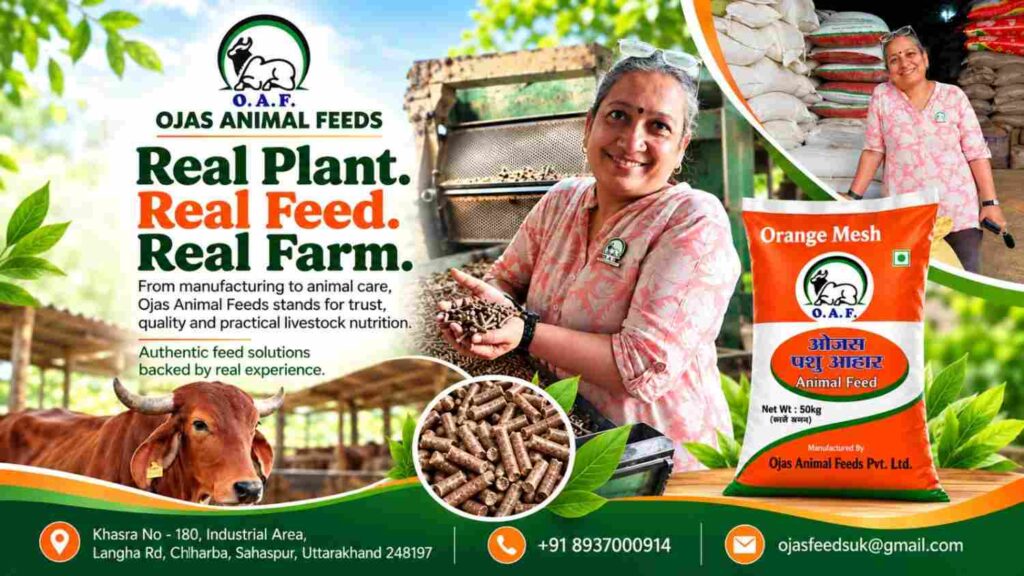
Better animal nutrition plays an important role in effective livestock management. Providing feed to animals is only one part of a complete feeding approach. The quality of feed, nutrient availability, feeding consistency, and understanding the nutritional requirements of different animals all contribute to better animal care.
For livestock farmers, choosing suitable animal feed and following proper feeding practices can help create a more balanced approach to everyday animal nutrition. Factors such as animal age, breed, production stage, activity level, and overall condition can influence their nutritional requirements.
At Ojas Animal Feeds, the focus is on practical animal nutrition and responsible feed manufacturing, with attention to quality and consistency throughout the feed production process.
Understanding the Importance of Animal Nutrition
Animal nutrition refers to the supply of essential nutrients required to support normal body functions, growth, maintenance, reproduction, and production. Animals need a combination of nutrients, including energy, protein, minerals, vitamins, fibre, and water.
The nutritional requirements of a calf are different from those of a mature dairy animal. Similarly, animals with different levels of activity or production may require different feeding approaches.
Understanding these differences can help farmers develop more appropriate feeding practices instead of following the same feeding routine for every animal.
The Role of Quality Animal Feed
Quality animal feed is an important part of a structured livestock nutrition program. Feed should provide suitable nutrients in a consistent and practical form according to the intended use.
Feed quality can be influenced by several factors, including:
- Selection of suitable ingredients
- Proper ingredient storage
- Appropriate processing
- Consistent formulation
- Proper handling and transportation
- Maintaining feed quality during storage
When these factors are managed carefully, farmers can follow a more consistent feeding routine and better understand the nutritional contribution of the feed being provided.
Nutritional Requirements Can Change
Animals do not have the same nutritional requirements throughout their lives. Their needs can change according to age, growth stage, reproductive condition, production level, and activity.
For example, young calves have nutritional requirements that support growth and development. Growing heifers may require a different balance of nutrients as they progress toward maturity. Dairy animals may have additional nutritional requirements depending on their milk production and stage of lactation.
Therefore, livestock nutrition should be considered as an ongoing process rather than a fixed feeding formula.
Why Consistent Feeding Practices Matter
Consistency is an important part of livestock management. Feeding animals at irregular times or frequently changing the feeding routine can make it more difficult to maintain a structured approach to nutrition.
Farmers can improve feeding management by maintaining regular feeding schedules, monitoring feed intake, providing clean drinking water, and observing animals regularly.
It is also useful to monitor changes in body condition, activity, appetite, and production. These observations can provide practical information about how animals are responding to their overall feeding routine.
Feed Quality and Animal Care
Animal nutrition and animal care are closely connected. Good feeding practices should be combined with proper housing, clean water, hygiene, regular observation, and appropriate veterinary guidance.
Feed alone cannot address every aspect of livestock health. A complete approach considers the animal’s overall environment and management practices.
Farmers should also avoid making sudden changes to an animal’s feeding routine without understanding the potential impact. When changes are necessary, they should be introduced carefully and based on the animal’s requirements.
From Ingredients to Finished Feed
The feed manufacturing process involves several stages, and each stage can influence the consistency of the final product.
Ingredient selection is an important starting point. Suitable ingredients need to be handled and stored properly before processing. During manufacturing, appropriate processing methods and quality control practices help maintain consistency.
At Ojas Animal Feeds, attention to feed manufacturing involves understanding practical livestock nutrition and maintaining responsible processes from ingredient selection to the final feed.
This approach highlights an important principle: good feed begins with careful attention to every stage of production.
Practical Feeding Considerations for Livestock Farmers
Farmers can consider several basic practices to support better feeding management:
1. Understand the Animal’s Requirements
Consider the animal’s age, growth stage, production level, and overall condition before planning its feeding routine.
2. Maintain a Regular Feeding Schedule
Providing feed at consistent times can support a more organized feeding routine.
3. Ensure Access to Clean Water
Water is an essential part of animal nutrition and should be available regularly.
4. Store Feed Properly
Feed should be stored in suitable conditions to help protect it from moisture, contamination, pests, and unnecessary exposure.
5. Observe Animals Regularly
Changes in appetite, body condition, activity, or production can provide useful information about the animal’s overall condition.
6. Avoid Unnecessary Feeding Changes
Sudden changes in feed or feeding practices should be avoided unless there is a clear reason and proper guidance is available.
Building Better Livestock Nutrition Practices
Better livestock nutrition is not about one single factor. It is the result of combining suitable feed, proper feeding practices, regular observation, clean water, and responsible animal management.
Farmers who understand the connection between feed quality and animal requirements can make more informed decisions about their feeding routines.
A practical approach also means reviewing feeding practices regularly and adapting them when animal requirements change.
Conclusion
Quality animal feed is an important part of better livestock nutrition, but effective animal care requires more than feed alone. Understanding nutritional requirements, maintaining consistent feeding practices, storing feed properly, providing clean water, and observing animals regularly can all contribute to better livestock management.
At Ojas Animal Feeds, the focus remains on practical animal nutrition and responsible feed manufacturing. From ingredient selection and processing to the final feed, every stage plays an important role in maintaining quality and consistency.
For livestock farmers, understanding the relationship between animal feed, nutrition, and animal care can be a valuable step toward more informed and responsible feeding practices.